


Self-harm Awareness Day 2026- Is Connection Coping?
This year’s Self-Harm Awareness Day isn’t just important for individual’s struggling with self-harm. It is an essential and amazing reminder for all of us to keep an eye on our wellbeing and that of others. Self-harm interacts with so many different parts of our lives whether its expressing emotions, coping with stress or traumatic experiences.
SO – what do we need to be AWARE of?
- We need to be AWARE that Awareness isn’t the answer, it’s Step 1.
Awareness days only work when they successfully encourage and support the individuals who are struggling to get help and support with recovery. That means that this year’s Self-Harm Awareness Day best helps the young people you know are struggling with self-harm IF they feel supported (and you understand more how to support them). That may mean knowing where to signpost them and how to go through that process, knowing how to listen and understand their point of view or knowing what tools and support you can offer them in community.
And for the young people you DON’T know may be self-harming. It best helps when they do not feel judged or outcast or triggered and called out!
This is why conversations on these topics need to be filled with empathy, kindness, understanding and clarity. And need to happen in strong relationships and spaces where people feel safe.
For us as Youth Workers – this feels like our bread and butter. The basics of youth work. Building community, knowing where to go but letting young people lead the way.
For us as Christians – I pray this is our posture. That we forgive easily, work hard to understand others perspectives and that we follow the teachings of a God who came to Earth and showed us to live with love, kindness and hope.
AND – is Connection Coping?
- YES - Connection really IS coping and here’s why!
This year’s SHAD theme is ‘Connection is Coping: Finding Support Together’.
A reminder that when we are struggling and need help to cope – whether in specific moments of overwhelm or because life is rough – time with others, support from safe people and connection can be key.
This is a central message to SO MUCH mental health support because whoever you are, whether you or people you know are struggling with self-harm or in some other way – getting the support of others, reaching out for help or talking are the best things we can do.
- Finding Support Together may mean being a safe place where people can be and feel distracted from difficult things.
Having Fun. - Finding Support Together may mean being real and meeting people where they are and with your honest experience.
Learning Together. - Finding Support Together may mean helping young people access the services they need, directing them to professionals and knowing where to turn.
Signposting Them. - Finding Support Together may mean being a calming and counselling space where therapeutic relationships can build and professional support is provided. Getting Trained.
- Finding Support Together may mean holding space for someone’s difficulties in a moment and knowing what to do to help a young person calm.
Co-Regulating.
This Self-Harm Awareness Day. Remember Connection is Coping.
I think the phrase Co-regulation sums that up perfectly and it’s an ESSENTIAL skill (you’re probably already using) for work with young people. Co-regulation means “connecting with a child who’s in distress and being able to evaluate what that child needs in the moment to help calm themselves” – or in simpler terms:
- noticing how a child is feeling
- being a calm presence when they feel that way
- guiding them on what to do with the feeling (whether by naming skills or redirecting them to skills)
By co-regulating with a young person we provide the safe community, help them learn coping and calming skills from watching us use them and meet them where they are – nowhere our emotions could be.
This means they learn the best way they know how – by following our lead!
But it also means we need to regulate our emotions so that they don’t impact the situation. And that’s why Self-Harm Awareness Day and Finding Support Together needs to be more than just naming self-harm or helping those who struggle with it. It needs to be about looking after ALL of our wellbeing, learning to cope yourself as well as helping young people do the same!
---
At Alumina I think we embody this message.
We explore recovery from self-harm in groups – learning together & sharing ideas.
We build genuine connections that encourage, celebrate and empower each person.
We go from a group of strangers to people who feel understood by others.
We practice skills together – watching each other use them and exploring them.
We make space for people to share what they need to and reflect as a group.
Alumina offers online, peer support and psychoeducation for young people between 10-17 years old. We do this in anonymous groups over a course of 7 weeks by looking at different coping skills, topics and discussing together – with the aim of Considering recovery from self-harm. To find out more check out www.selfharm.co.uk
Alumina- Free Self-harm Support for 10-17's

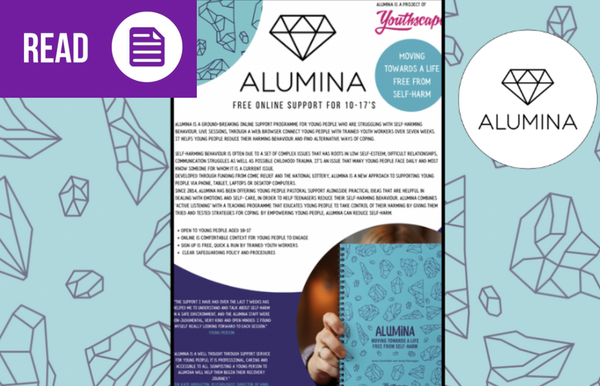
Alumina information for those supporting young people
Thinking of signposting a young person to Alumina but want to find out more first?
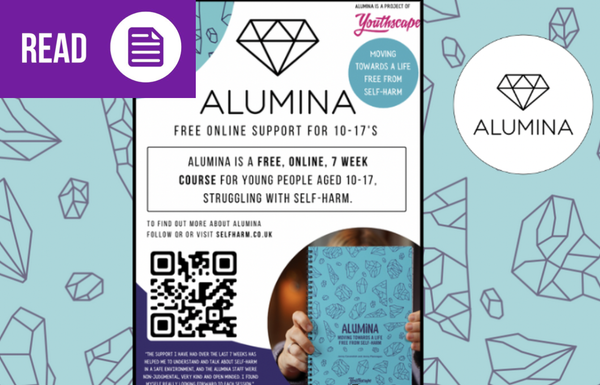
Alumina Poster A3 (signposting material)
A3 poster PDF to use to direct young people to Alumina for self-harm support
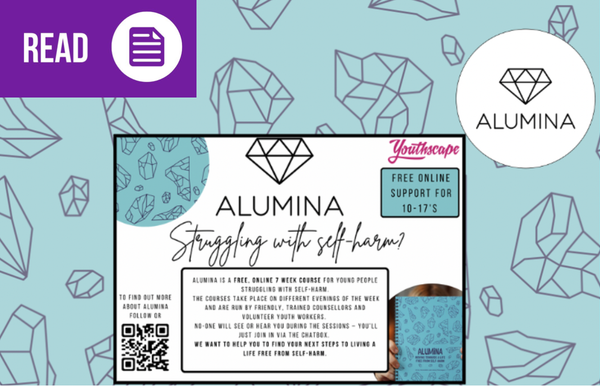
Alumina cards (signposting material)
Pocket sized cards for young people with details about Alumina (PDF print file)